
Small Meeting Room Hire in Peterborough If you were looking to hire a small meeting…
Hotdesking Do’s and Don’ts
Hotdesking Etiquette
Pre covid many office desks were messy stacked with endless papers, personal items and half-drunk tea mugs. As employees transition back into the office environment after a prolonged period of remote work due to Covid-19 this is a thing of the past and hot desking a new normal. In this article we look at hotdesking do’s and don’ts
For the workplace Covid-19 has created a “new normal” , which includes rethinking of the physical layout of office space to allow room for social distancing. Additionally much higher cleanliness and sanitation standards within the working environment.
Beyond the pandemic, blue chip organisations like Google, Facebook and Twitter have announced a permanent shift towards a hybrid in /remote -office working model. In this post covid world, sharing desks will become more common place and essential, to avoid excessive office costs and environmental impact.
Hot desking or office hoteling provide the opportunity to use your existing space more effectively in order to optimise productivity. For those companies who have employees working from home, hotdesking or a shared desk approach could be the future, it’s time to start thinking about the proper etiquette of sharing space with co-workers.
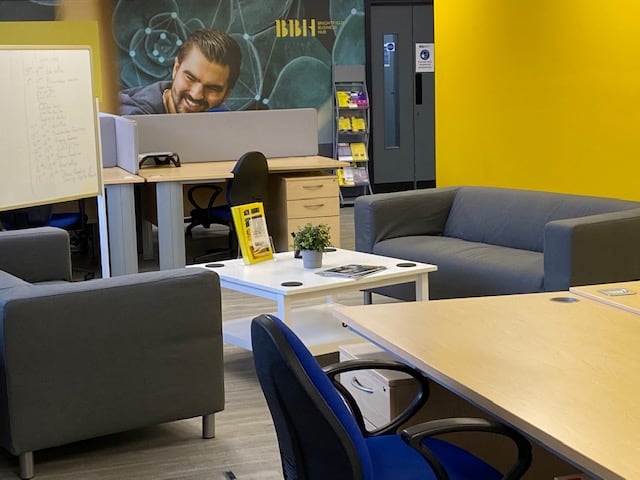
Coworking Spaces & Hotdesking increasing
Research indicates that co-working spaces are on the rise and studies estimate that in the UK almost 5 million people will be working from co-working spaces by 2024, an increase of over 150% compared to 2020.
The movement towards increased co-working follows after Covid and comes as many businesses and employees try to figure out what their work life will look like in the future. There have been various pieces of research and surveys showing that an overwhelming majority of employees would prefer a hybrid work environment. This new working allowing them to divide their time between working from home and the office. Interestingly research also revealed that only a very small percentage of employees want to work from home full time after COVID-19. How employees are indicating they would like to work can be seen below:
- Almost 40% would prefer working from home most of the time, with some time at the office ( this could be considered as having your cake and eating it )
- Almost a third would prefer to spend equal time at home and the office ( this showcases a level of commitment to being in the workplace environment)
- A fifth would prefer to work primarily from the office, carrying on with with historic working practices whilst working from home when required
- Just over 5% would prefer to work from home full time
- A very small percentage 1 to 2% would prefer to return to the office full time
Post Covid New Working Ways
A recently published article by McKinsey & Company states, “The pandemic has forced the adoption of new ways of working. Organizations must reimagine their work and the role of offices in creating safe, productive, and enjoyable jobs and lives for employees.”
The recommendations below are suggested for organisations when it comes to the future role of the office:
- Reconstruct how work is done.
- There are jobs being completed that we thought had to be done “in the office”. That just isnt the case and technology / new working practices have demonstrated this
- Decide ‘people to work’ or ‘work to people’ which means organisations should identify what can be done remotely.
- As we saw from the statistics, some people still favour the traditional approach of going into an office, whilst others want the freedom of working from home. For those returning to the office, will it be a different, more flexible environment than previously
- Redesign the workplace to support organizational priorities and resize the footprint creatively
- So rather than banks of rows of desks each assigned to a specific person, perhaps desks than anyone can use as and when they are in the office
McKinsey summarise their findings with this, “Organisations must embrace the changes caused by Covid to dispense with suboptimal old habits and systems. A well-planned return to offices can use this moment to reinvent their role and create a better experience for talent, improve collaboration and productivity, and reduce costs.”
Importantly businesses that can leverage learnings from the COVID-19 pandemic to structure new and better ways of working will be at a distinct advantage versus their competitors. This includes something as simple as more effective use of office desks and spaces.
Hot desking can be part of a bigger shift towards an agile working strategy. Because the office is now one of many places where employees can effectively complete their jobs the need for permanent desks doesn’t always make sense.
Embracing Change
Hot desking is often part of a bigger shift towards an agile working strategy. Because the office is now one of many places where employees can effectively complete their jobs the need for permanent desks doesn’t always make sense.
5 hotdesking do’s and donts
Keep it clean!
In a post-COVID world one of the biggest concerns regarding hot-desking is hygiene, especially when a recent study found that the average desk has 400 times more bacteria than the average toilet seat.
Our advice at Brightfield Business Hub to hot desk users is: leave your desk a little bit better than when you got to it.
It can seem tempting at the end of a tough day to just leave the mess for someone else to deal with. Paper coffee cups, (worst still half filled coffee cups) sweet wrappers, the remains of lunch, water bottles are all items that seem to make there way onto an office desk. So don’t do it, clear up after use.
Schhh quiet please!
An office is a shared space designed to promote productivity. With that in mind, try to keep noise to a minimum. Casual conversations can be great, but louder collaborative meetings should be held in a meeting room, or cafe area to avoid disrupting others.
Hot desking = decluttering
A positive of hot-desking is that you can’t use your workspace as storage. That means all those little nicks, nacks and mementos that start to clutter your desk can’t be accrued.
To achieve this, simply leave non-essential items in your rucksack or briefcase, rather than dumping everything on your desk “just in case” you need them.
Don’t accept poor behaviour
Everyone using hot desking needs to be on the same page for a hot desking / coworking space to work. Understandably, some may struggle to get to grips with the changes, but everyone should be making an effort. This is why you should always speak up if you find someone who chooses not to cooperate.
It should be super simple for those hotdesking to make complaints without it becoming confrontational.
Log out when not at your desk
While hot-desking has many benefits, it can create a higher risk regarding data protection and security. One of the easiest ways to reduce that risk is to lock and log out of your computer.
Make sure to lock your PC every time you leave it unattended even if you are just going for a short break. This prevents nosy parkers from seeing potentially sensitive information and reduces the chance of any GDPR issues
HotdeskingNear Me – Summary
Contact Michelle Craig at Brightfield Business Hub on 01733 595885 or email Michelle Craig at arrange an appointment to see the wide range of hotdesking options at BBH. Click here to have all your hotdesking do’s and don’ts questions answered.
For information on short term self storage facilities that are ideal for businesses click here
Related Posts


