
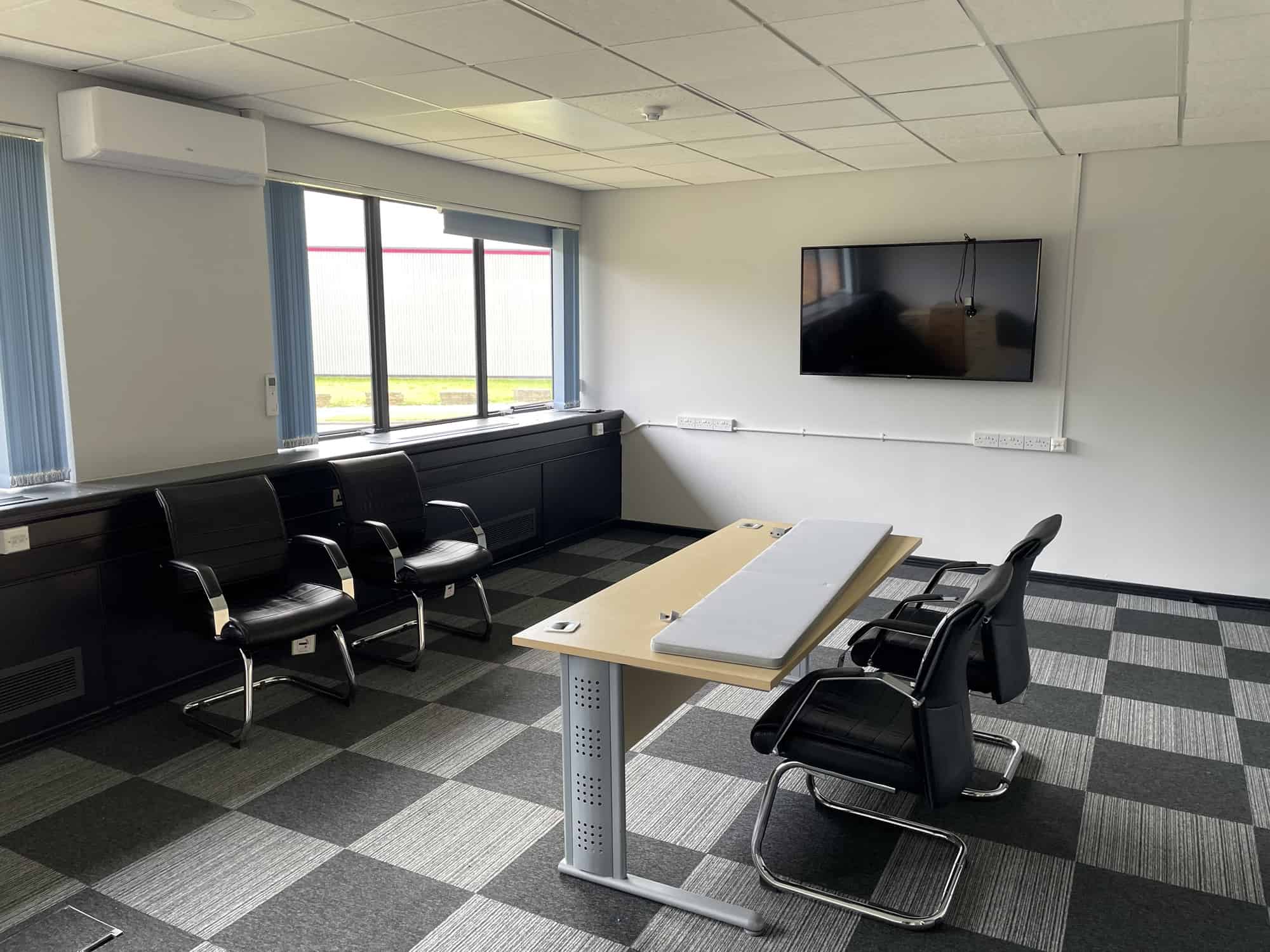
Small Meeting Room Hire in Peterborough If you were looking to hire a small meeting…
Training Room
Looking To Hire A Training Room
If you are planning an training event, and need to hire a training room, there is a lot to consider. We have created a training room hire checklist to help you.
Selecting the right training venue and hiring the best training room is crucial. The training environment has a significant impact upon how effectively delegates learn.
This article is designed for anyone who is organising a training course for the first time.
Travel, Parking & Access
- Does the training venue have carparking available? If it does will there sufficient for all training delegates
- Are carparking facilities FREE– if not, what is the charge? A real downer for a training session can be having to pay an extortionate amount for parking before you have even sat down for the training
- Is the training venue easy to find? Ideally it will be located close to a major road with simple access
- Can you get to the training centre via public transport?
- Is the venue accessible for those with disabilities?
Training Room Acoustics
- Does the training room have appropriate sound amplification facilities eg speakers
- Will delegates be able to hear the tutor?
Connecting To Screens or Projectors
- Will someone be on hand to help the presenter to connect to the projector?
- Is there a laptop available or does the presenter need to bring their own?
- What connectors are available on the projection screen?
- Does the presenter have these connectors available on their laptop?
Viewing Display Screens
-
- Are there any blind spots in the room?
- Will all participants be able to see the screen without twisting?
- Can people sitting at the back of the room see the screen clearly?

Training Room Lighting & Temperature
-
- Does the room have natural daylight?
- Are there black out blinds available to prevent glare on the screens?
- Are there windows that open?
- Can you control the temperature in the room?
- Are there thermostatic valves on the radiators?
- Will the room be a comfortable temperature upon arrival?
Layout of the Training Room
- Have you discussed the room layout with the venue?
- Which layout option have you agreed?
- Board room
- Classroom
- U-shape
- Lecture
- Check that all delegates facing the screen?
- Can all delegates see the screen?
Are You Connected
- Is there free wi-fi available
- Is the wi-fi secure
- Will delegates need a password to access the wi-fi
- What is the speed and reliability of the wi-fi connection [Particularly where wi-fi is necessary for the course]
With Training Food Matters
- Does the venue have catering facilities?
- Can the venue cater for dietary requirements?
- Are there places outside of the training room for delegates to eat ( Inside and Outside)
Training Room Furnishings
- Is the seating in the training room sufficiently comfortable for a full day / half day
- Is there enough space on the tables for training materials?
- Is the floor in the training room carpeted? (Moving chairs on a hard floor can create a loud disruptive noise)
Training Event Productivity Improvements
A good training event is dependent on a number of factors. Of paramount importance of course is the demeanour and performance of the lecturer. The latter should be confident, enthusiastic and above all knowledgeable if she or he hopes to engage attendees.
Whilst entertainment & expression are crucial, training is nothing without content. The training material to be presented must interest and educate in equal measure; delegates are after all present to learn.
Underpinning both the trainers ability and the content is the suitability of the training venue itself. Failure to secure the right location can undermine even great training events so consider the following.
The Ideal Training Venue
The best training locations are nearly always those that have been thoroughly scouted beforehand. Thorough research and evaluation helps organisers determine exactly where will be conducive to the training experience. So consider the following factors with your training venue
1. Easy Access
Unsurprisingly, journeys that mirror assault courses are unappealing ones and can seriously impact attendance. I still remember a training session held at a major hotel on a busy roundabout in a major city. For someone new to the city trying to access the hotel car parking was a major dilemma. Almost half of the delegates at the training session arrived late and frustrated, a nightmare for the trainers delivering the training course.
If good transport links are in place, along with the likes of parking and bike shelters upon arrival you are much more likely to have happy attendees. Accessibility extends to the building itself. Clear signage should usher guests in and out of a facility, while provisions for any disabled attendees should also be in place. Importantly the emphasis is on organisers to ensure such aspects of signage and accessibility are in place.
2. Technical and Non technical equipment
The likelihood is that a training session will require both technical and non-technical. From monitors, projectors, microphones, flip charts, speakers, video players etc etc. Don’t assume that every venue will have these readily available. When talking to the training venue enquire as to exactly what equipment a conference facility will provide.
In addition to the electronic devices, you want to ensure basic stationary ( pen and paper as a minimum) is included. If no stationary is provided you will need to source pens and paper for all attendees.
3. Space
The best training sessions often involve practical elements where delegates get out of their seats and move around which ideally requires room for them to easily manoeuvre. Having additional space through adjoining rooms to allow for breakout areas can be a big bonus with a training venue
Having a big main room in itself will not guarantee a productive training session. Other factors such as tables and chairs, air conditioning, lighting and acoustics all need to be considered.
4. Please be “comfortably” seated
If you are attending a full day training session as delegate then comfortable seating is a must. Hardened, rigid seating will leave attendees pre-occupied with just how pained they are, detracting from your agenda.
5. Not too hot (not too cold)
Air conditioning could play a crucial role in your training, depending on the time of year. We have all experienced the randomness of the English climate from record-breaking temperatures in the summer, through to needing to where a couple of jumpers.
The prospect of being holed up in an overheating room whilst trying to concentrate and learn isn’t appealing. Good training venues will have both air conditioning and access to windows (with blinds) but best to ask before confirming any booking.
6. Let there be light
Visiting the training venue prior to your event will allow you and your colleagues to evaluate lighting, natural or otherwise. We would always encourage organisers to visit a venue and check it out when it comes to arranging training events.
Whilst natural light can lend itself to certain sessions it can undermine others. You should seek assurances that your chosen venue encompasses blinds or curtains for those times where you want to block it out.
Getting lighting levels correct is crucial especially when attendees will be viewing screens or monitors. It is not unusual for attendees to find lighting conditions too glaring or indeed too dim. As the organiser its down to you to be the judge.
7. 1,2,3 Testing Testing
Similar logic extends to acoustics. Training sessions will not prove productive if the speaker leading it cannot be heard from certain sections of the room. To guard against this is to test out the acoustics yourself.
It is advisable to stand at different points and gauge whether you can hear a colleague speaking. For larger rooms will speakers require to use a microphone. If so what is the quality of sound as teh speaker moves around. Additionally in larger rooms what if you have a question and answer session, will roving microphones be required so delegates can be heard when asking questions.
8. Eat Well, Learn Better
If you are running an all day training session forget refreshment breaks at your peril. Regular breaks are essential if you hope to retain enthusiasm and attention over the training course duration. In most circumstances there will be an expectancy for you to provide as a minimum hot drinks and water at interval breaks. On all day courses if you can offer your delegates some nice food within the training environment you have the opportunity to keep happy and contented delegates.
Do not doubt the importance of sustenance in making for a productive training session.
Other factors for delivering great training
9. Encourage interaction
Interaction between the trainer and delegates can distinguish a great training session from an average one. Those who are delivering the training should seek to incorporate within their presentation movement, gesticulation and a host of practical assignments for those in attendance.
Some believe as much as 80% of any lecture or seminar should take the form of individual or group tasks. Inviting contributions will also keep people invested in what you have to say. Ask for the sharing of life experiences relevant to the topic where appropriate.
10. Time (Time management)
Adhering to an agreed timeframe meanwhile is vitally important.
If a training session is due to start at 9.04 then it should have commenced at 9.04. If it is scheduled to finish at 16.42 then make sure that those delegates who need to leave at that time have received all the training content
Now you may have noticed the start and end times not 9.00 and 4.30, why you may ask. Well lets think about catching an aeroplane flight. These leave (well hopefully they leave) at very specific times, you definitely will miss your flight if your not ready too board at the specific times. Thin about being more specific with your timings next time your running a training session.
11. Fun
Now training isn’t supposed to be slapstick, but neither is it meant to be dry death by PowerPoint. If possible (without being a comedian) inject humour into your session. A key training point has greater chance of striking a chord and thus being remembered if it can be emphasised through humour, as opposed to just statistics.
12. Oh no its PowerPoint
Visual aids are a crucial ingredient to a good training event. Handouts should be well designed, clear in their messaging and allowing for annotation.
That same pre-planning is demanded of PowerPoint presentations.
Our recommendation is that these are opened up on the equipment in the training room prior to the event itself. That way you can pre-empt any technical faults, such as
- Slides not being formatted correctly on screen – i.e. logos missing or complete parts of a slide
- Any animation or slide build not working
- Embedded videos not playing
- Or the videos playing but the sound not working
As for the make-up of the slides themselves, encompassing white space will ensure you do not overwhelm attendees with too much information at one time. I have seen a wonderful professor present a PowerPoint slide featuring essentially a word doc with 12 point font – it was completely useless to the speaker or delegates.
For that reason companies running different types of training sessions should look to rotate those charged with providing them. Those working in a smaller team meanwhile may benefit from approaching the sessions from a new angle now and again.
Finally, versatility brings its own rewards. Anybody leading a training event should be looking for tell-tale signs that a certain method is being received favourably. If that is the case they will call upon that particular technique several times throughout the day.
By contrast, if a certain idea seems to be falling flat, it should be changed out for another tactic.
In short, the secret to a productive training session is pairing good content with surroundings befitting of it. One without the other jeopardises the success of the event as a whole, leaving all parties disappointed
Training Room – Summary
It goes without saying that a good venue matters little without a good lecturer. The latter must be enthusiastic, knowledgeable and above all engaging if they truly hope to enlighten an audience.
A good starting point for any session is a complete overview of what you plan to cover. Indeed, this sets the tone for the class and becomes a reference point of sorts as the training day unfolds.
Like a good report you should compliment an introduction with a conclusion. Summarising what you have covered during the session reinforces the subject matter one last time.
In training repetition is after all a powerful tool.
Contact Michelle Craig at Brightfield Business Hub on 01733 595885 or email Michelle Craig at arrange an appointment to see the wide range of training rooms and areas at BBH. Click here to have all your training room questions answered.
For information on short term self storage facilities that are ideal for businesses click here
Related Posts


